Category: Uncategorized

  • What It Takes to Build Our Spiritual House

    Introduction

    When a man sets out to build a house, he does not begin by pouring concrete or raising walls. The first thing he must do is buy the land. Ownership must be settled before anything else can take place. Until the land is purchased, no foundation can be laid and no house can be built. In the same way, before salvation could ever be applied to mankind, the price of redemption had to be paid.

    The four Gospels—Matthew, Mark, Luke, and John—record how Almighty God stepped into His creation to do just that. Through His birth, ministry, death, burial, and resurrection, Jesus Christ purchased what was lost. “For ye are bought with a price.” The Gospels show us the cost of redemption being fully paid.

    After land is purchased, preparation begins. The ground must be cleared, leveled, and made ready. Stones are removed, debris is cleared away, and the soil is examined. This stage is very important and essential. Without preparation, even the best foundation will fail. In the same way, the Lord prepares the heart. In John chapter 3, Jesus speaks with Nicodemus about the necessity of being born again. This was not about outward religion, but inward readiness. Before anything could be built, the heart had to be prepared. This ingredient in the foundation is called Repentance.

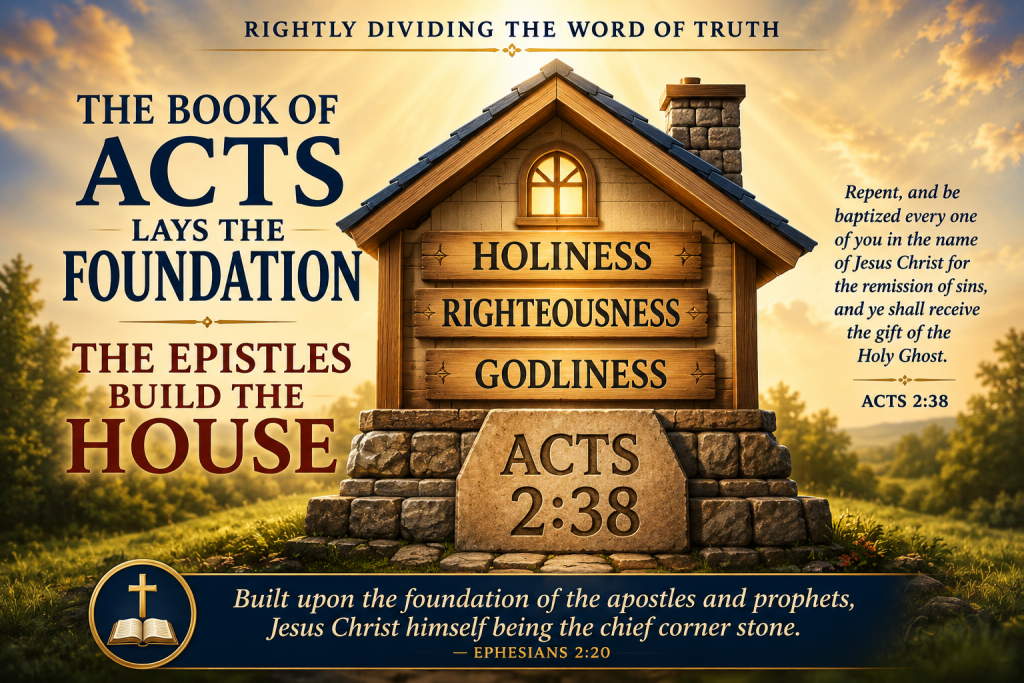
    Only after the land is bought and the ground prepared does the foundation come. This is where permanence begins. The foundation determines the stability of everything that follows. The Book of Acts shows us where that foundation was laid. On the Day of Pentecost, when the people asked what they must do (Acts 2:37), Peter declared repentance, baptism in the name of Jesus Christ for the remission of sins, and the receiving of the Holy Ghost (Acts 2:38). This was not merely a theory of salvation, but obedience to the Gospel. This is the laying of the foundation.

    Once the foundation is laid, the house can be built. Walls go up, rooms take shape, and the structure becomes a place to live. Rooms of holiness, righteousness, godliness, faithfulness, and spiritual maturity begin to take form.

    This is the role of the Epistles. They do not purchase the land, nor do they lay the foundation again. Those things have already taken place . The Epistles were written to believers who had already obeyed (Acts 2:38). They instruct, correct, reprove, and guide the Church in how to live and build upon the foundation laid in the Book of Acts.

    When the order is followed, everything fits together as God intended. But when Scripture is taken out of order or read without context, confusion follows. A house without a foundation cannot stand, and a foundation without purchased land has no rightful place. When God’s Word is rightly divided, however, the beauty and clarity of salvation come into full view.


    The Gospels: The Land Is Purchased

    Before a house can be built, the land must first be purchased. The Gospels reveal how God Himself came into the world in the person of Jesus Christ to purchase redemption for fallen mankind.

    His miraculous birth, sinless life, sacrificial death, burial, and victorious resurrection secured what no man could ever obtain on his own. The Gospels are the record of redemption being purchased. The price was paid in full at Calvary.

    Without the purchase of redemption, there could be no salvation. Before the foundation could be laid, the land had to be bought.


    Preparing the Ground

    Once land is purchased, it must be prepared. Trees are removed, rocks are cleared away, and the ground is made ready to receive the foundation. This is how repentance looks.

    Likewise, God prepares the heart of man.

    Jesus told Nicodemus:

    “Except a man be born again, he cannot see the kingdom of God.” (John 3:3)

    Salvation is not merely accepting a religious belief. It begins with a heart that is willing to obey God. Repentance softens the soil of the heart and prepares it for what is to come.

    A foundation cannot be poured upon ground that has not been prepared.


    The Book of Acts: The Foundation Is Laid

    Every house depends upon its foundation. If the foundation is weak, the entire structure is at risk.

    The Book of Acts records the laying of the New Testament foundation.

    On the Day of Pentecost, convicted sinners asked:

    “Men and brethren, what shall we do?” (Acts 2:37)

    Peter answered:

    “Repent, and be baptized every one of you in the name of Jesus Christ for the remission of sins, and ye shall receive the gift of the Holy Ghost.” (Acts 2:38)

    An important note: Peter specifically commanded baptism in the name of Jesus Christ. Matthew 28:19 records Jesus instructing His disciples to baptize “in the name of” the Father, and of the Son, and of the Holy Ghost. The word name is singular. Father, Son, and Holy Ghost are descriptive titles, while the name revealed and invoked by the apostles throughout the Book of Acts was Jesus Christ.

    This pattern continues throughout the Book of Acts. Whether Jew, Samaritan, Gentile, or disciple of John, the foundation remained the same.

    The Book of Acts is not merely church history. It is the record of how the New Testament Church began and how believers entered into the salvation purchased by Jesus Christ.

    The Book of Acts lays the foundation.


    The Epistles: Building the House

    After the foundation is laid, construction begins.

    Walls are erected. Rooms take shape. The house becomes a place where life is lived.

    This is the purpose of the Epistles.

    The Epistles were written to people who had already obeyed Acts 2:38. They were not written to explain how to lay the foundation again. Rather, they teach believers how to live upon the foundation already established.

    The Epistles teach holiness.

    They teach separation from sin.

    They teach faithfulness, Godliness, Holiness, Righteousness, Humility, Prayer, Worship, and Christian conduct.

    The Apostle Paul, Peter, James, John, and Jude were building upon the foundation that had already been laid by Peter in the second chapter of Acts.

    The Epistles build the house.


    Why Rightly Dividing the Word Matters

    Confusion often arises when believers attempt to build the house before laying the foundation.

    Many turn to the Epistles while neglecting the Book of Acts. Others quote instructions written to established believers while overlooking how those believers first entered the Church.

    God’s Word is perfect when it is read in its proper order and context.

    The Gospels reveal redemption purchased.

    The Book of Acts reveals salvation applied.

    The Epistles reveal believers growing and living upon that foundation.

    When the Scriptures are rightly divided, the plan of God becomes clear and beautiful.


    Conclusion

    The Gospels show us the land being bought and prepared.

    The Book of Acts shows us the foundation being laid.

    The Epistles show us the house being built.

    When these portions of Scripture are understood in their proper place, the message of salvation becomes clear.

    The Book of Acts lays the foundation.

    The Epistles build the house.

    Learn More

    For a deeper study on how the Book of Acts lays the foundation and the Epistles build the house, visit our Books Page:

    👉 View Our Books Here — https://anchorofhopepublication.com/books/
  • True Story-When Two Cans of Green Beans Became a Miracle

    A friend once shared a story with me that happened many years ago, and I’ve never forgotten it.

    The year was 1979. He was a young Christian in his mid-twenties, still learning what it meant to trust God completely. Life was not easy, and money was scarce. There were days when he wasn’t sure where the next meal would come from.

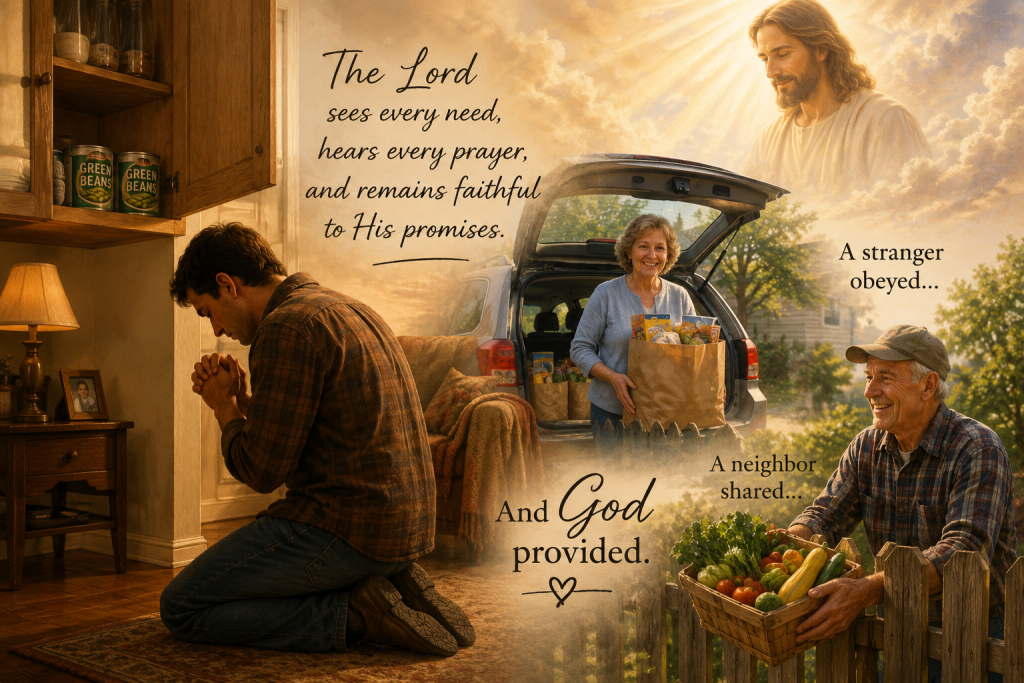
    One Saturday morning, he walked into the kitchen and opened the cabinet doors. He looked inside and found only two cans of green beans to feed his family.

    That was it.

    No hidden groceries tucked away in the back. No money to run to the store. Just two cans of green beans staring back at him.

    He quietly closed the cabinet doors and walked into the living room. There, he knelt down and began to pray.

    “Lord Jesus, You already know my situation. You know there are only two cans of green beans in the cabinet. I know You see our need, and I know You will provide.”

    After praying, he spent time worshipping and thanking the Lord for His goodness. Then he got up and went about his day, leaving the matter in God’s hands.

    A few hours later, there was a knock at the door.

    When he opened it, a woman he had never met before was standing there.

    “Sir,” she said, “I know you don’t know me, but the Lord Jesus told me to bring something to you.”

    She then asked him to help carry some things from her car.

    When they reached the vehicle, he was astonished. The trunk was filled with groceries. Three large bags of food had been purchased specifically for his family.

    Think about that for a moment.

    The only One who knew about those two cans of green beans was the Lord.

    Yet God had spoken to a complete stranger, and she obeyed.

    As wonderful as that was, the miracle was not over.

    Later that same day, a neighbor came by. They had never really talked much beyond a friendly wave.

    The neighbor said, “We have so many vegetables growing in our garden that we can’t possibly use them all. Please come and take as much as you want.”

    Before the day ended, God had sent not one person, but two.

    A stranger arrived with bags of groceries.

    A neighbor arrived with fresh vegetables.

    The Lord had provided far more than two cans of green beans.

    Looking back after all these years, my friend still speaks about that day and how the Lord Jesus astounded him. It became one of the landmarks of his Christian journey—a reminder that God sees every need, hears prayer, and remains faithful to His promises.

    The lesson has stayed with him throughout his life:

    When God’s children place their trust in Him, He is able to provide in ways they never expected.

    Miracles are not confined to the pages of Scripture.

    The same Lord who cared for His people then still cares for them today.

    And sometimes, a miracle begins with nothing more than two cans of green beans and a simple prayer.

    Sometimes we pray for God to move mountains, while He is teaching us that He is faithful in the smallest details of life. The God who sees two cans of green beans in a kitchen cabinet is the same God who numbers the hairs of our head and knows every need before we ask. If you are struggling today, don’t give up. The Lord is faithful.

  • As It Was in the Days of Noah: Where Are We on God’s Time Clock?

    Matthew 24:37-38 (KJV)

    As we look around our world today, many Christians are asking a serious question: Where are we on God’s Time Clock? The Lord Jesus pointed us back to the days of Noah as a prophetic signpost. He wanted future generations to recognize the spiritual condition of the world before His return. By examining Noah’s generation, we gain insight into our own and can better understand the times in which we live.

    “But as the days of Noe were, so shall also the coming of the Son of man be. For as in the days that were before the flood they were eating and drinking, marrying and giving in marriage, until the day that Noe entered into the ark.”

    When many people read these verses, they often focus on the words eating, drinking, marrying, and giving in marriage. Yet there is nothing sinful about any of these activities. People must eat, drink, work, raise families, and plan for the future. The Lord Jesus was not condemning these things. Rather, He was revealing the condition of the hearts of the people living in Noah’s generation. And would be the same in ours.

    Life continued as normal.

    People woke up each morning, went about their business, made plans, celebrated weddings, raised children, and pursued their own interests. Meanwhile, Noah was faithfully preaching God’s warning of coming judgment. Yet the vast majority of people paid no attention.

    The Apostle Peter referred to Noah as “a preacher of righteousness” (2 Peter 2:5). For many years Noah proclaimed God’s message while building the ark. Every hammer strike and every board placed upon that vessel testified that judgment was coming. Yet the people continued with their lives as though God’s warning would never come to pass. Even though Noah preach for 100 years.

    The tragedy was not that they were eating and drinking. The tragedy was that they were doing these things while completely ignoring what God was saying.

    The World Before the Flood

    Genesis describes a world that had become corrupt and filled with violence.

    Genesis 6:5 (KJV)

    “And God saw that the wickedness of man was great in the earth, and that every imagination of the thoughts of his heart was only evil continually.”

    The people of Noah’s day had become so consumed with their own desires that they no longer feared God. They lived as though there would never be a day of accountability.

    Does this not describe much of our world today?

    Modern society is consumed with entertainment, pleasure, wealth, technology, and self-gratification. Many people have little interest in the things of God. While there are more Bibles available than at any time in history, many remain indifferent to God’s Word.

    The world is busy.

    People are making plans for next year, next decade, and retirement, yet few stop to consider eternity.

    Noah Entered the Ark

    The Lord Jesus said something very important:

    “until the day that Noe entered into the ark.”

    There came a moment when the opportunity to enter the ark ended.

    The door remained open for years while Noah preached and prepared. Anyone could have believed God’s warning and entered the ark. Yet the day arrived when Noah and his family entered, and God shut the door.

    Genesis 7:16 (KJV)

    “and the LORD shut him in.”

    Once that door was closed, there was no second opportunity.

    The rain began to fall.

    The floodwaters rose.

    Those who had mocked Noah suddenly realized that his message had been true all along.

    A Lesson for Our Generation

    Jesus used Noah’s generation as a warning to every generation that would follow.

    Just as the flood came suddenly upon an unsuspecting world, the coming of the Son of Man will catch many by surprise. The problem will not be a lack of warning. The problem will be that many people will be too occupied with the affairs of this life to pay attention.

    The Gospel continues to be preached.

    God’s Word continues to be proclaimed.

    The invitation to salvation remains open.

    Yet many continue with life as usual, assuming there will always be more time.

    Are We Prepared?

    The question before us is not whether we are eating, drinking, marrying, or working. The question is whether we are listening to God’s warning and preparing our hearts for eternity.

    Noah believed God when the rest of the world did not.

    He acted upon God’s Word.

    He entered the ark.

    The Lord Jesus pointed to Noah’s example and warned that His return would come in a similar manner.

    May we not be found among those who ignored the warning, but among those who believe God’s Word and prepare for the day when the Son of Man returns.

    “But as the days of Noe were, so shall also the coming of the Son of man be.” — Matthew 24:37

    While no man knows the day or the hour of the Lord’s return, Jesus did tell us to observe the signs. The comparison to Noah’s generation was not given merely as a history lesson but as a prophetic warning. As the moral and spiritual conditions of our world continue to mirror those ancient days, the question remains: Where are we on God’s Time Clock? Only God knows the exact moment, but the signs remind us that His return is nearer than when we first believed.

    Continue Your Study

    If you found this article helpful, you may enjoy my book:

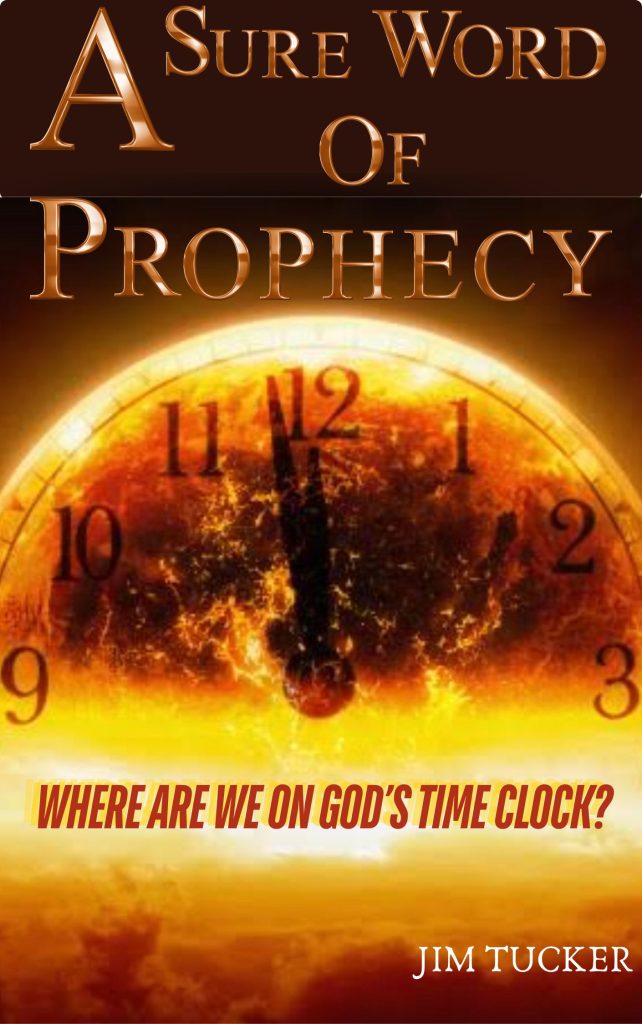
    A Sure Word of Prophecy: Where Are We on God’s Time Clock?

    This book explores biblical prophecy, the signs of the times, the rise of global powers, the Mark of the Beast, and what Scripture reveals about the days leading up to the return of Jesus Christ.

    👉 Learn more here:
    https://anchorofhopepublication.com/books/
  • For What Purpose Did the Lord Jesus Give Peter the Keys of the Kingdom?

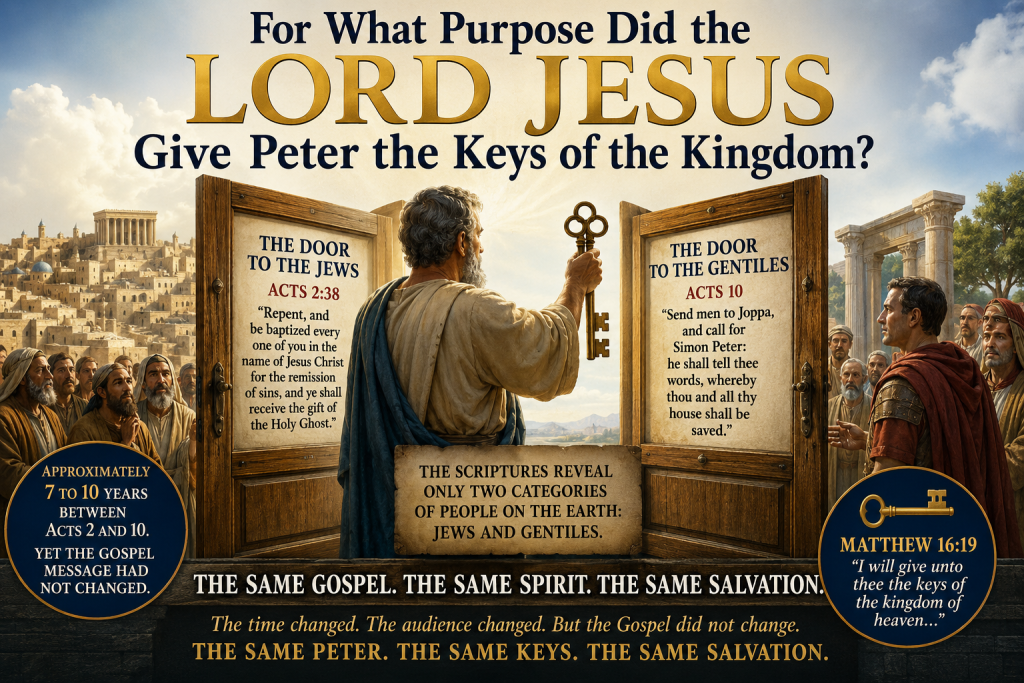
    Peter holding the Keys of the Kingdom opening the Gospel door to Jews and Gentiles in Acts 2 and Acts 10

    When the Lord Jesus spoke to Peter in Matthew 16:19, He made one of the most profound statements in all of Scripture:

    “And I will give unto thee the keys of the kingdom of heaven…”

    But what were those keys for?

    Were they merely symbolic?
    Did they represent earthly authority?
    Or did they serve a far greater purpose connected to salvation itself?

    Keys are given to unlock doors.

    The Lord Jesus was not speaking of a natural kingdom built by human governments or earthly power. He was speaking of the Kingdom of God and the entrance into the New Covenant Church through the Gospel of Jesus Christ.

    The Keys of the Kingdom were not given to Peter by accident.

    They were given to him to unlock the door of salvation through the Gospel.

    The Scriptures reveal two categories of people upon the earth:
    Jews and Gentiles.

    And remarkably, Peter was chosen by God to open the Gospel door to both.

    First, Peter unlocked the door to the Jews on the Day of Pentecost in Acts chapter 2. After preaching the death, burial, and resurrection of Jesus Christ, the people were convicted in their hearts and cried out:

    “Men and brethren, what shall we do?”

    Peter then gave them the answer:

    “Repent, and be baptized every one of you in the name of Jesus Christ for the remission of sins, and ye shall receive the gift of the Holy Ghost.”
    — Acts 2:38

    This was not accidental.
    This was the opening of the door.

    But the Lord was not finished opening the Kingdom.

    In Acts chapter 10, a Gentile man named Cornelius received a visitation from an angel. Yet the angel did not preach salvation to Cornelius directly. Instead, he instructed him to send for Simon Peter.

    Why Peter?

    Because Peter had been given the Keys of the Kingdom.

    The angel declared that Peter would come and tell him “words, whereby thou and all thy house shall be saved.”

    When Peter arrived at the house of Cornelius, he preached Jesus Christ unto them. As Peter spoke, the Holy Ghost fell upon the Gentiles just as it had upon the Jews in Acts chapter 2.

    Peter then commanded them to be baptized in the Name of the Lord.

    The same Gospel.
    The same Spirit.
    The same salvation.

    Most Bible chronologies place approximately 7 to 10 years between Acts chapter 2 and Acts chapter 10.

    Yet during all of that time, the Gospel message had not changed.

    When Peter opened the door to the Jews in Acts 2, the message was repentance, baptism in the Name of Jesus Christ, and the gift of the Holy Ghost.

    And years later, when the door was opened to the Gentiles at the house of Cornelius, God poured out the very same Holy Ghost upon them.

    The time changed.
    The audience changed.
    But the Gospel did not change.

    The same Peter.
    The same Keys.
    The same salvation.

    Peter unlocked the door first to the Jews, then to the Gentiles, fulfilling the very purpose for which the Lord Jesus had given him the Keys of the Kingdom.

    Matthew 16:19 was not an empty statement hidden in mystery.
    It became a living reality through the preaching of the Gospel in the Book of Acts.

    From that moment forward, the door of salvation stood open to all who would believe and obey the Gospel of Jesus Christ.

    If you would like to study this subject deeper, including the Biblical foundation of repentance, baptism in the Name of Jesus Christ, and the receiving of the Holy Ghost, you may also enjoy my book:

    Faith Unto Salvation: Is It a Confession or an Experience?

    This book examines whether salvation in the New Testament was merely a verbal confession, or a genuine spiritual experience rooted in obedience to the Gospel.”

  • From the Euphrates to the East: Is Revelation 9:13-16 Unfolding?

    There are moments in Scripture that seem to sit quietly for centuries…
    until the world begins to move in a way that makes you look again.

    One of those moments is found in Revelation 9:13–16.

    John describes a voice from the altar, commanding the release of four angels bound at the great river Euphrates—angels prepared for a specific hour, a specific day, a specific moment in God’s timeline. When they are released, a massive army is unleashed—so great in number that John records it as two hundred million.

    Not only that, but the Scripture says when John heard the number of this massive army he said: And I heard the number of them. As though it surprised him at the size of this army.

    You can take all of the armies of the world, combine them together, and they would not come to 200 million.

    There are only two nations in the world with the population to support such a number: India and China.

    These are not conclusions—they are markers.

    They give us a way to see how something of this scale could even be possible.

    And when you look at the world stage today, China is actively expanding its influence beyond its borders.

    With the news reports today, we see China’s involvement connected to the Euphrates region—specifically Iran.

    Now we are no longer speaking in theory…
    we are watching movements.

    Now let that settle for a moment.

    In John’s day, such a number would have been unimaginable.

    But today… it is not.

    For the first time in history, we are not just reading these words… we can actually see how something like this could take shape.

    And that is what makes this moment different.

    The Euphrates River has always been more than just a body of water. It has been a boundary—a dividing line between empires, a place from which invading forces historically came. In Scripture, it represents a region from which judgment has often been associated.

    And now, in our time, that same region—the Euphrates corridor—sits at the center of global tension.

    Revelation 9 does not describe a random event—it describes something prepared.
    Appointed.
    Timed.

    The language is precise: “for an hour, and a day, and a month, and a year.”

    That tells us something very important:

    👉 God is not reacting to world events.
    👉 World events are moving according to His timeline.

    So when we see movements in the East…
    When we see alliances forming around the Euphrates region…
    When we see global powers shifting…

    We don’t panic.

    We don’t speculate wildly.

    We do what Jesus told us to do:

    👉 Watch.
    👉 Discern.
    👉 Be ready.

    The Book of Acts laid the foundation…
    The Epistles build the house…
    And Revelation shows us how it will all be finished.

    I have much more to say about China and this situation in the Middle East, in my book A Sure Word Of Prophecy.