Many people quote Acts 2:38… but few truly understand what it means.
Some treat it as a suggestion. Others avoid it altogether.
But when we slow down and let Scripture speak for itself, we begin to see something powerful — something clear, direct, and life-changing.
In this article, we are going to walk through Acts 2:38 step by step… not with opinions, but with the Word of God.
The Scripture
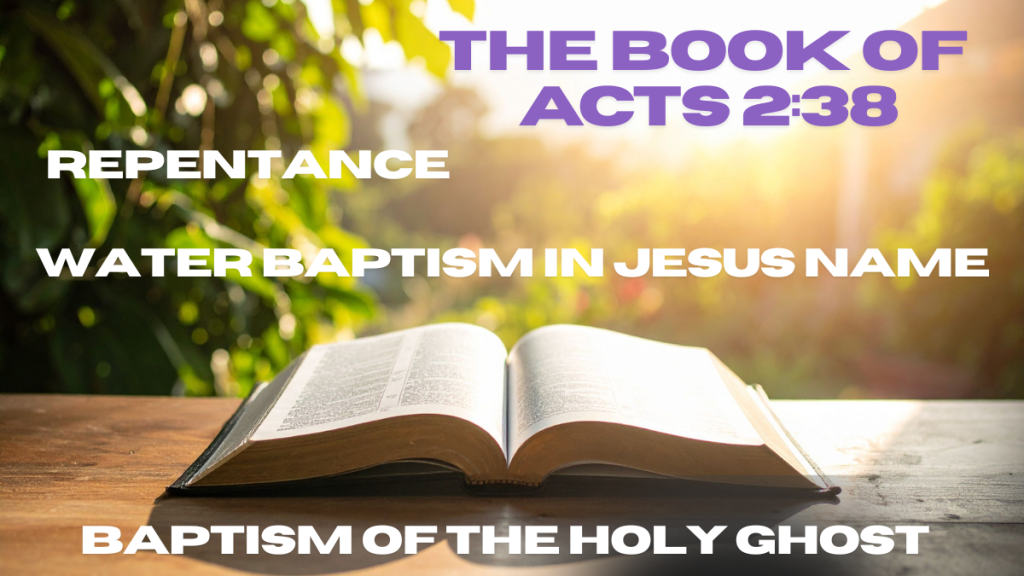
“Then Peter said unto them, Repent, and be baptized every one of you in the name of Jesus Christ for the remission of sins, and ye shall receive the gift of the Holy Ghost.” — Acts 2:38
This was not spoken casually. This was the response given when people asked:
👉 “What shall we do?”
Peter did not hesitate. He gave them a clear answer.
What Does “Repent” Mean in Acts 2:38?
Repentance is more than saying “I’m sorry.”
It is a turning.
A turning away from sin… and a turning toward God.
It is when a person begins to see their life through the lens of God’s Word — and realizes something needs to change.
Repentance is where it begins.
Without repentance, nothing else in Acts 2:38 can truly take root.
Why Baptism in the Name of Jesus Christ Matters
Peter did not say to be baptized in titles.
He said:
👉 “in the name of Jesus Christ”
This matters.
Because baptism is not just a symbol — it is connected to the remission of sins.
When we are baptized in the name of Jesus Christ, we are identifying with Him — His death, His burial, and His resurrection.
It is not tradition. It is obedience to what was preached.
What Does It Mean to Receive the Holy Ghost?
The final part of Acts 2:38 is a promise:
👉 “ye shall receive the gift of the Holy Ghost”
This is not something reserved for a select few.
It is a gift.
The Holy Ghost is the Spirit of God dwelling within a person — empowering them to live a new life.
This is not just a moment… it is a transformation.
The Power of Acts 2:38
Acts 2:38 is not complicated.
But it is powerful.
It answers the question:
👉 What must I do?
Repent
Be baptized in the name of Jesus Christ
Receive the gift of the Holy Ghost
This is not man’s idea.
This is Scripture.
A Final Thought
Many people want the benefits of faith… without the response that Scripture calls for.
But Acts 2:38 shows us something different.
It shows us that faith responds.
It turns. It obeys. It receives.
Go Deeper
If you want to go deeper into this subject and others rooted in Scripture:
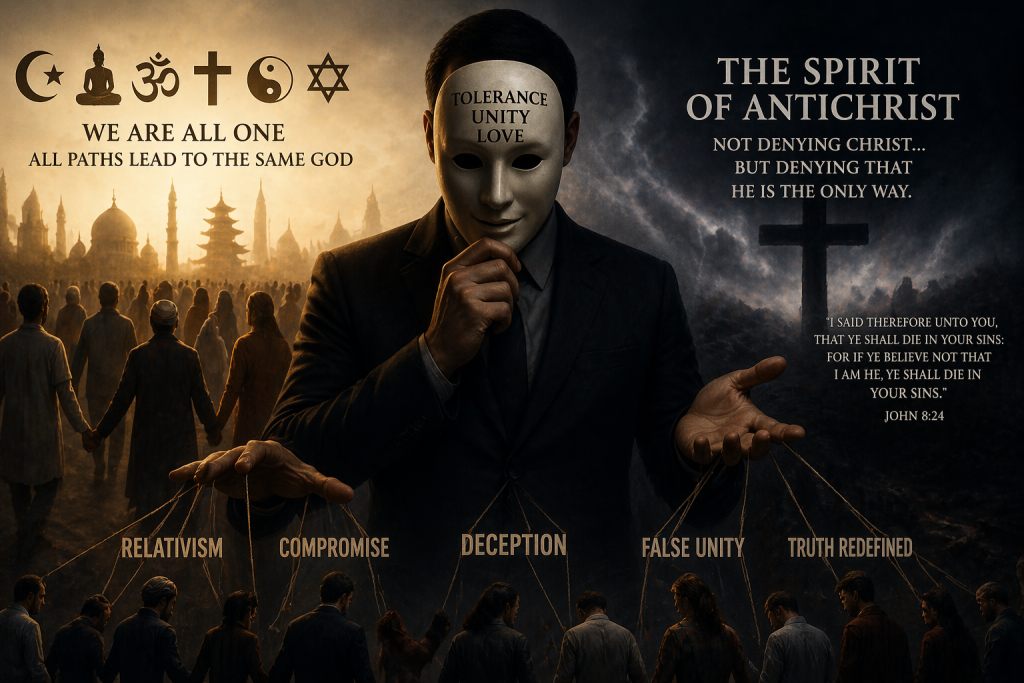
People have heard much about the Antichrist. Yet very few understand or even heard about the spirit of antichrist—what it looks like, how it speaks, and how easily it blends into everyday conversation.
It does not always come with open rebellion. More often, it comes wrapped in words that sound peaceful, reasonable, and even compassionate.
I was reminded of this not long after arriving in Thailand.
Mr. Richardson, a Thai friend, came to visit our home. During our conversation, I shared with him my desire to find a building—to establish a church.
He smiled and asked, “You want to have a church building here?”
I said, “Sure.” I explained that my purpose in coming to Thailand was simple: the Thai people need to know who the True and Living God is—Jesus Christ is His Name.
Mr. Richardson paused, then responded with a tone of gentle skepticism:
“Ah… what’s the big deal? Everyone’s god is the same. He is just called by different names.”
Now, on the surface, that sounds harmless. Even kind. It sounds like unity.
So I answered him plainly:
“So you’re telling me we should all just hold hands, sing ‘Kumbaya,’ be one big happy family—and come together to worship your god, whether his name is Buddha, Allah, Brahma, Vishnu, Shiva, or Hare Krishna?”
What he said reflects a mindset that is becoming more common in our day.
A mindset that says:
Truth is flexible
Beliefs are interchangeable
And ultimately… all paths lead to the same place
But the Word of God does not agree with that.
The Lord Jesus Christ Himself said:
“If ye believe not that I am he, ye shall die in your sins.” — John 8:24
That is not a statement of inclusion. That is a line drawn in truth.
What Mr. Richardson expressed may sound appealing— gentle, comforting, and non-confrontational.
But Scripture identifies this very thinking as something far more serious.
It is the spirit of antichrist.
Not because it openly opposes religion… but because it quietly replaces truth with compromise.
The spirit of antichrist does not always deny God outright. Instead, it redefines Him.
It says:
“Jesus is one of many ways”
“All beliefs are valid”
“Let’s not divide over doctrine”
And in doing so, it removes the very foundation of the Gospel.
We are living in a time where the pressure to “go along to get along” is increasing.
Stand firm, and you will be called narrow. Speak truth, and you will be labeled intolerant. Refuse compromise, and you will be misunderstood.
But truth has never been determined by majority opinion.
The danger is not always in what sounds wrong.
The danger is in what sounds almost right.
Why This Matters
Because deception in the last days will not always be obvious.
It will feel reasonable. It will sound loving. It will appear unified.
But if it denies who Jesus truly is—it is not from God.
A Question to Consider
Are we shaping truth to fit the world… or are we allowing the Word of God to shape us?
Closing Thought
Unity without truth is not unity—it is compromise.
And the spirit of antichrist thrives wherever truth is quietly set aside for the sake of getting along.
John describes a voice from the altar, commanding the release of four angels bound at the great river Euphrates—angels prepared for a specific hour, a specific day, a specific moment in God’s timeline. When they are released, a massive army is unleashed—so great in number that John records it as two hundred million.
Not only that, but the Scripture says when John heard the number of this massive army he said: And I heard the number of them. As though it surprised him at the size of this army.
You can take all of the armies of the world, combine them together, and they would not come to 200 million.
There are only two nations in the world with the population to support such a number: India and China.
These are not conclusions—they are markers.
They give us a way to see how something of this scale could even be possible.
And when you look at the world stage today, China is actively expanding its influence beyond its borders.
With the news reports today, we see China’s involvement connected to the Euphrates region—specifically Iran.
Now we are no longer speaking in theory… we are watching movements.
Now let that settle for a moment.
In John’s day, such a number would have been unimaginable.
But today… it is not.
For the first time in history, we are not just reading these words… we can actually see how something like this could take shape.
And that is what makes this moment different.
The Euphrates River has always been more than just a body of water. It has been a boundary—a dividing line between empires, a place from which invading forces historically came. In Scripture, it represents a region from which judgment has often been associated.
And now, in our time, that same region—the Euphrates corridor—sits at the center of global tension.
Revelation 9 does not describe a random event—it describes something prepared. Appointed. Timed.
The language is precise: “for an hour, and a day, and a month, and a year.”
That tells us something very important:
👉 God is not reacting to world events. 👉 World events are moving according to His timeline.
So when we see movements in the East… When we see alliances forming around the Euphrates region… When we see global powers shifting…
We don’t panic.
We don’t speculate wildly.
We do what Jesus told us to do:
👉 Watch. 👉 Discern. 👉 Be ready.
The Book of Acts laid the foundation… The Epistles build the house… And Revelation shows us how it will all be finished.
I have much more to say about China and this situation in the Middle East, in my book A Sure Word Of Prophecy.
Acts 2:38 is one of the clearest statements in the Bible about salvation. In this verse, the apostle Peter instructs those who were convicted in their hearts to repent, be baptized in the name of Jesus Christ for the remission of sins, and receive the gift of the Holy Spirit. This shows that salvation is not just a confession of faith, but a response that involves repentance, obedience, and spiritual transformation.
In the previous post, Faith and Repentance: Vital Ingredients in Our Spiritual Foundation, we began to see what forms the foundation of salvation.
In this post, we take the next step and look at what that foundation actually looks like according to Scripture.
Body
On the Day of Pentecost, recorded in the Book of Acts, the people who heard Peter preach were deeply moved. They asked a direct question:
“Men and brethren, what shall we do?”
Peter’s answer was just as direct:
“Repent, and be baptized every one of you in the name of Jesus Christ for the remission of sins, and ye shall receive the gift of the Holy Ghost.” (Acts 2:38)
This response reveals three essential elements:
1. Repentance
Repentance is more than saying “I’m sorry.” It is a turning of the heart—a decision to turn away from sin and turn toward God.
2. Baptism in the Name of Jesus Christ
Peter specifically instructed them to be baptized in the name of Jesus Christ. This was not presented as optional, but as part of the response to the Gospel. Baptism represents the washing away of sins and identification with Christ.
3. Receiving the Holy Spirit
The promise did not stop with repentance and baptism. Peter said they would receive the gift of the Holy Spirit. This is the inward work of God that brings new life.
What This Means for Salvation
Acts 2:38 shows that salvation is not simply a moment of verbal confession—it is a response to the Gospel that involves both obedience and transformation.
This ties directly into a deeper question many people ask:
Is salvation just a confession, or is it a transformation?
(You can explore that more fully here: Is Salvation Just a Confession — or a Transformation?)
Conclusion
When we read Acts 2:38 in its context, we see a clear and powerful message:
Salvation is not passive—it is a response.
It begins with Faith, and because we have faith, repentance will come, then we will be obedient to wash away our sins through water baptism in the name of Jesus Christ. Then a transformed life through the power of the Holy Ghost will give us the power to be what the Lord desires for us..
“But without faith it is impossible to please him: for he that cometh to God must believe that he is, and that he is a rewarder of them that diligently seek him.” — Hebrews 11:6
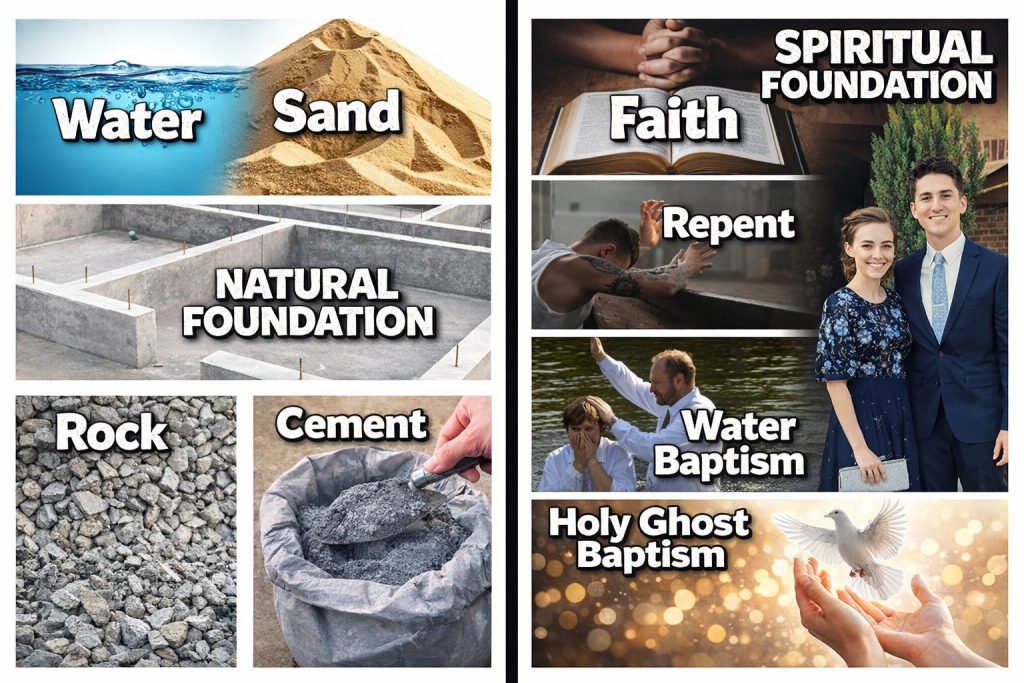
There are vital ingredients to our spiritual foundation, just as there are essential elements in a natural foundation.
In the natural, a strong foundation is made using water, sand, rock, and cement—often reinforced with steel rebar for strength and stability. If any of these ingredients are left out, the foundation is incomplete.
In the same way, our spiritual foundation is made up of four vital ingredients:
Faith, Repentance, Water Baptism in the name of Jesus Christ, and the Baptism of the Holy Ghost.
This is our spiritual foundation. If any of these are left out, our spiritual foundation is incomplete.
Before any structure can stand, the foundation must first be laid.
If the foundation is not right, everything built upon it will be unstable.
We begin with faith.
“But without faith it is impossible to please him…” — Hebrews 11:6
Faith is what brings a man to God.
It is the realization that God is real, that His Word is true, and that He is a rewarder of those who diligently seek Him.
But faith is not just an acknowledgement.
When a man truly believes… for believe is an action word, not just said.
something happens within him.
There is a stirring. A conviction. A realization that he cannot remain the same.
This is where repentance begins.
“Repent, and be baptized every one of you in the name of Jesus Christ for the remission of sins…” — Acts 2:38
Repentance is more than saying, “I’m sorry.”
It is a turning of the heart, a change of mind, and a decision to leave one path and begin walking in another.
A man does not repent to find faith…
He repents because he believes.
Faith brings a man to God, but repentance is where he begins to turn.
Without repentance, there is no true change.
A person may believe… they may feel conviction…
But until there is a turning, the foundation is incomplete.
Just as a man cannot build a house without first preparing the ground…
Faith and repentance is the beginning of our spiritual foundation.
So the question is not simply:
Do I believe?
But rather:
Has there been a turning in my life?
Have I begun laying the foundation… or am I trying to build without it?
Because faith and repentance are not separate ideas…
They are vital ingredients in our spiritual foundation.
In our last study, we looked at what it means to be Born-Again, and how Jesus made it clear that entering the Kingdom of God is not a casual experience, but a true transformation.
As we continue, we now come to a very important statement that the Lord spoke to Nicodemus:
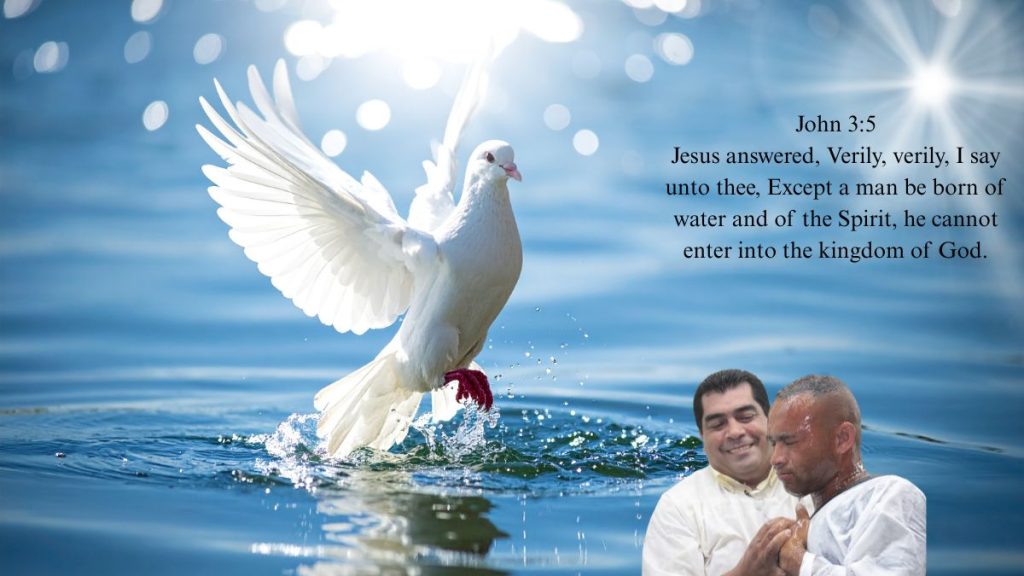
“Verily, verily, I say unto thee, Except a man be born of water and of the Spirit, he cannot enter into the kingdom of God.” — John 3:5
These words are not a suggestion. They are not symbolic language meant to be loosely interpreted.
They are a direct and absolute requirement given by Jesus Himself.
Greek Insight — “Water”
When Jesus said we must be “born of water,” the word translated water comes from the Greek word hydōr (ὕδωρ).
This word is used throughout the New Testament, and it consistently refers to literal water, not something symbolic or abstract.
For example:
It is the same word used when John baptized in the Jordan River
The same word used when Jesus was baptized
The same word used when Philip and the eunuch went down into the water
The same word used when Peter said on the Day of Pentecost, “be baptized… in the name of Jesus Christ”
In each of these cases, the meaning is clear — it is speaking of actual water.
There is nothing in the wording of John 3:5 that suggests a symbolic meaning. Jesus was speaking plainly, just as He did in many other teachings.
This helps us understand that being “born of water” is not merely an idea or a metaphor, but something that involves a real response — one that aligns with what we see practiced throughout the Book of Acts.
When we allow Scripture to interpret Scripture, the meaning becomes consistent and clear.
Greek Insight — “Spirit”
When Jesus said we must be “born of the Spirit,” the word translated Spirit comes from the Greek word pneuma (πνεῦμα).
This word refers to breath, wind, or spirit, and throughout the New Testament it is used to describe the Spirit of God at work within a person.
Jesus had already used this same word just a few verses earlier:
“The wind bloweth where it listeth, and thou hearest the sound thereof… so is every one that is born of the Spirit.” — John 3:8
Here, the Lord connects the idea of the wind (pneuma) with the work of the Spirit, showing that while it may not be seen with the natural eye, its effects are real and evident.
As we continue through the New Testament, we see this fulfilled when believers received the Holy Ghost. It was not merely an inward feeling, but a real and powerful experience — one that produced a visible change in their lives.
So when Jesus spoke of being “born of the Spirit,” He was pointing to a true spiritual birth — the work of God within a person that brings new life.
Main Body
When Jesus said, “Verily, verily,” He was emphasizing something of great importance — something certain, something that cannot be set aside.
To be born again, He tells us, involves two elements:
Born of water
Born of the Spirit
This raises an important question:
What did Jesus mean by this?
Many today interpret this in different ways. Some say it refers only to a spiritual experience. Others suggest it is symbolic language. But when we allow Scripture to interpret Scripture, a clearer picture begins to emerge.
Throughout the New Testament, we see a consistent pattern when people responded to the Gospel.
On the Day of Pentecost, when the people were convicted in their hearts and asked what they must do, Peter gave a direct answer:
“Repent, and be baptized every one of you in the name of Jesus Christ for the remission of sins, and ye shall receive the gift of the Holy Ghost.” — Acts 2:38
Here we see the same two elements:
Water — baptism
Spirit — receiving the Holy Ghost
This was not presented as an optional step, but as the response to the Gospel.
As we continue through the Book of Acts, this pattern appears again and again. Those who believed did not stop at belief alone — they responded with obedience, and their lives were changed.
The new birth is not merely an idea or a confession. It is an experience that affects the heart, the direction of life, and the walk with God.
Application / Reflection
This brings the question back to us:
Have we experienced what Jesus described?
Not simply a moment of belief, but a true new birth — one that involves both water and Spirit.
The words of Jesus are clear:
“Except a man be born of water and of the Spirit, he cannot enter into the kingdom of God.”
This is not meant to discourage, but to guide us into truth.
God has not hidden the path from us — He has revealed it plainly in His Word.
Closing
The new birth is where the Christian life truly begins. It is not the end of the journey, but the doorway into it.
And when we follow what the Scriptures teach, we do not walk in uncertainty — we walk in the assurance of what God has promised.
One of the most direct and powerful statements Jesus ever made about entering the Kingdom of God was spoken during His conversation with Nicodemus. He was surprised by what the Lord Jesus spoke to him.
“Jesus answered and said unto him, Verily, verily, I say unto thee, Except a man be born again, he cannot see the kingdom of God.” — John 3:3
Nicodemus was a religious leader, a teacher in Israel, and a man familiar with the Scriptures. Yet Jesus immediately directed his attention to something deeper than religious knowledge or outward devotion.
The Lord spoke about a spiritual birth.
When Jesus said “Verily, verily,” He was emphasizing the absolute certainty of what He was about to say. It was not a suggestion or a philosophical idea. It was a divine truth. And this is what He taught Nicodemus.
No one can see the Kingdom of God unless they experience this new birth.
Nicodemus struggled to understand what Jesus meant. He thought in terms of natural birth and asked how a man could be born a second time.
But Jesus was speaking about something spiritual—a transforming experience that gives a person the power to live for God as they truly desire, in righteousness and holiness.
This is verified in Acts 1:8:
“But ye shall receive power, after that the Holy Ghost is come upon you: and ye shall be witnesses unto me both in Jerusalem, and in all Judaea, and in Samaria, and unto the uttermost part of the earth.” — Acts 1:8
Then in John 3:5 the Lord Jesus explained what the born-again experience entails:
“Except a man be born of water and of the Spirit,he cannot enter into the kingdom of God.” — John 3:5
Just as every person must experience a natural birth to enter this world, the Scriptures teach that a person must experience a spiritual birth to enter the Kingdom of God.
This new birth is more than a simple profession of belief. It is the beginning of a transformed life.
When a person truly encounters the Gospel and responds to God with faith and obedience, something changes within them. We are endued with power from on high, our heart is renewed, our lifestyle changes, and we begin walking in a new life with Christ.
This does not happen with just a confession of faith or a personal acknowledgement of our belief. For this reason the Scripture says:
“Thou believest that there is one God; thou doest well: the devils also believe, and tremble.” — James 2:19
If simply saying “I believe” were enough, then even the devil could be saved.
Jesus did not present the new birth as optional. He presented it as essential.
“Ye must be born again.”
These words still stand today as one of the most important truths in all of Scripture.
Continue the Study — #4
This article is part of a Scripture journey exploring how the Bible describes entering the Kingdom of God.
Next article in the series: “Born of Water and of the Spirit — John 3:5”
“Then said one unto him, Lord, are there few that be saved? And he said unto them, Strive to enter in at the strait gate: for many, I say unto you, will seek to enter in, and shall not be able.” — Luke 13:23–24
When someone asked Jesus the question, “Lord, are there few that be saved?” the Lord did not respond by giving a number. Instead, He gave a warning and an instruction: “Strive to enter in at the strait gate.”
The word strive comes from the Greek word agonizomai, which means to struggle, to contend, or to exert earnest effort. Jesus was teaching that entering the Kingdom of God is not something casual or careless. It requires sincerity of heart and a genuine response to God.
In another place Jesus used similar language when He said, “The law and the prophets were until John: since that time the kingdom of God is preached, and every man presseth into it” (Luke 16:16). Both passages present the same picture: the Kingdom of God is open and being preached, but those who enter must respond with sincerity and determination.
These words of Jesus stand in contrast to the common idea that entering the Kingdom is easy or requires little response from us. The Lord’s own teaching shows that it involves a sincere heart that is willing to pursue God and respond to His truth in obedience.
The invitation of the Gospel is open, but Jesus did not present the Kingdom as something to drift into. He called people to press toward it with sincerity, humility, and faith.
This is also a theme I explore more deeply in my book Faith Unto Salvation: Is It a Confession or an Experience?, where the Scriptures are examined to understand what the New Testament truly teaches about being Born-Again.
Jesus made a statement that challenges the casual approach many people have toward the things of God.
“The law and the prophets were until John: since that time the kingdom of God is preached, and every man presseth into it.” — Luke 16:16
Notice the wording the Lord used. He did not say the Kingdom would be entered casually or by simple agreement. He said that men must press into it.
The word “press” speaks of effort, determination, and desire. It paints the picture of someone who sees something valuable ahead of them and refuses to remain where they are.
The Words of Jesus Challenge Casual Belief
In our modern religious culture, many have been taught that salvation requires little more than confession — a simple verbal acknowledgement of belief. Yet when we read the words of Jesus, we see a very different picture.
The Pursuit of the Kingdom
In fact, the Lord spoke often about seeking, knocking, striving, and entering in. These words therefore describe an active pursuit of God.
This is why the message of the Gospel always carries with it a call to transformation.
As a result, when a person truly begins to seek the Kingdom of God, something begins to happen within them.. Their heart changes. Their desires begin to shift. What once satisfied them no longer does. They begin to hunger for righteousness and truth.
This pressing is not about human effort earning salvation. Rather, it is the response of a heart that has seen the value of the Kingdom.
Jesus illustrated this in another place when He spoke of a man who found treasure hidden in a field. When the man realized the value of what he had discovered, he sold everything he had in order to obtain that field.
That is what happens when someone truly sees the Kingdom of God.
The question we must each ask ourselves is simple:
A Question for Our Hearts
How deeply do we desire the Kingdom of God?
Is our pursuit of God something casual and occasional? Or have we begun to press toward Him with a sincere heart?
“The words of Jesus remind us that the Kingdom is not something we drift into. It is something we pursue with faith, humility, purpose, and a heart that longs for truth.”
And the beautiful promise of Scripture is that those who truly seek Him will not seek in vain.
“Blessed are they which do hunger and thirst after righteousness: for they shall be filled.” — Matthew 5:6
Jesus said the Kingdom of God must be pressed into. What did He mean by pressing into the Kingdom of God?
This is not a question meant to criticize sincere believers. It is a question meant to bring clarity. Because if we misunderstand salvation, we misunderstand the very foundation of the Christian life.
Jesus did not tell Nicodemus, “You must confess correctly.” He said, “Except a man be born again, he cannot see the kingdom of God” (John 3:3).
A birth is not merely a statement. It is a transformation.
When Jesus spoke of being born again, He described something spiritual, inward, and life-altering. Birth implies beginning. It implies change. It implies that something new has come into existence that was not there before.
Yet modern language sometimes reduces salvation to a transaction — a moment of verbal acknowledgment — rather than a supernatural work of God within the heart, and within our life.
In Acts 2:38, Peter did not present salvation as a simple formula. He declared, “Repent, and be baptized every one of you in the name of Jesus Christ for the remission of sins, and ye shall receive the gift of the Holy Ghost.”
Repentance is not mere regret. Baptism is not symbolic ritual alone. Receiving the Holy Ghost is not emotional excitement.
Each of these speaks of participation in a transforming work of God.
The early Church did not preach casual conversion. They preached new life.
This does not mean that words are unimportant. Confession matters. Faith must be expressed. Scripture tells us that we confess with the mouth and believe in the heart (Romans 10:9–10).
But confession without transformation leaves something incomplete.
If a man claims to be born again yet remains untouched inwardly — unchanged in desire, unchanged in direction, unchanged in allegiance, and unchanged in lifestyle — should we not carefully examine what Scripture means by new birth?
Salvation is not behavior modification. It is not moral improvement. It is not religious affiliation.
It is like uncovering a well in dry ground. The digging does not create the water — it simply removes what blocks it. When the living water flows, it refreshes the weary heart in a way no human effort ever could.
When a person is truly born again, something shifts. The heart is awakened. The conscience is stirred. The love of sin is challenged. Our love for Christ begins to grow.
The Christian life is not built upon a sentence spoken once. It is built upon a life made new.
This gentle reminder is not meant to unsettle sincere believers, but to encourage deeper reflection. The foundation of our faith must be strong. If it is shallow, the structure built upon it will struggle.
Salvation, according to Scripture, is not less than confession. But it is certainly more.
It is transformation.
This topic is explored further inFaith Unto Salvation. Learn more at AnchorOfHopePublication.com.
Want to Go Deeper?
If this message encouraged you, I invite you to download my free 5-Day Devotional:
Receive steady biblical encouragement rooted in Scripture — designed to strengthen your faith and anchor your heart in God’s Word.
Join the Scripture Study Community and receive it instantly.