Author: Jim Tucker

  • Faith and Repentance: Vital Ingredients in Our Spiritual Foundation

    “But without faith it is impossible to please him: for he that cometh to God must believe that he is, and that he is a rewarder of them that diligently seek him.” — Hebrews 11:6

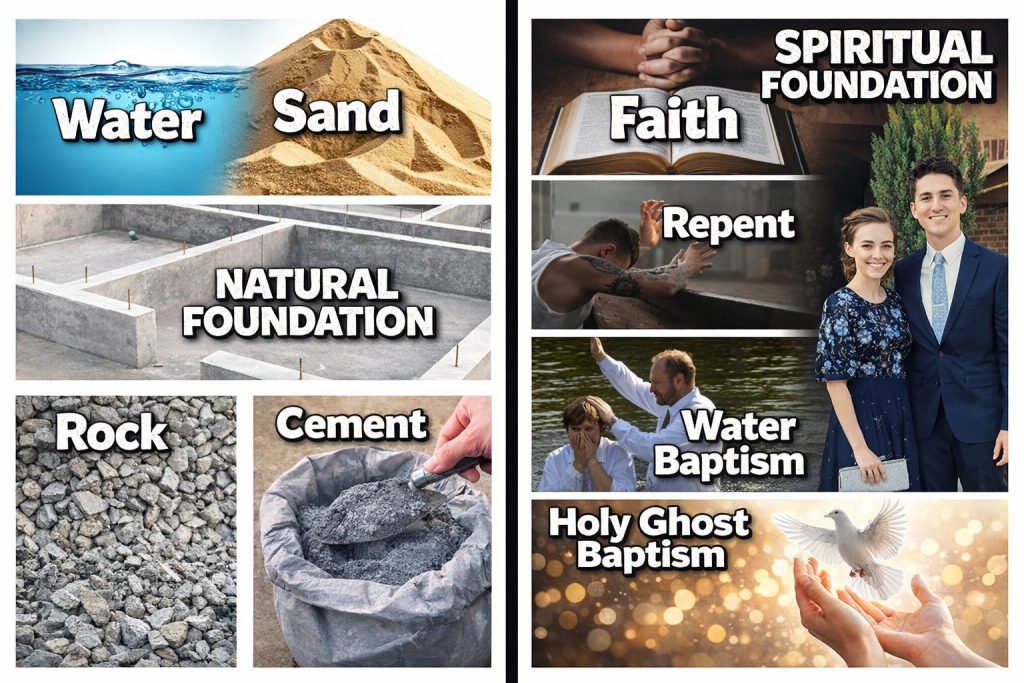
    There are vital ingredients to our spiritual foundation, just as there are essential elements in a natural foundation.

    In the natural, a strong foundation is made using water, sand, rock, and cement—often reinforced with steel rebar for strength and stability. If any of these ingredients are left out, the foundation is incomplete.

    In the same way, our spiritual foundation is made up of four vital ingredients:

    Faith,
    Repentance,
    Water Baptism in the name of Jesus Christ,
    and the Baptism of the Holy Ghost.

    This is our spiritual foundation. If any of these are left out, our spiritual foundation is incomplete.

    Before any structure can stand, the foundation must first be laid.

    If the foundation is not right, everything built upon it will be unstable.


    We begin with faith.

    “But without faith it is impossible to please him…” — Hebrews 11:6

    Faith is what brings a man to God.

    It is the realization that God is real,
    that His Word is true,
    and that He is a rewarder of those who diligently seek Him.


    But faith is not just an acknowledgement.

    When a man truly believes… for believe is an action word, not just said.

    something happens within him.

    There is a stirring.
    A conviction.
    A realization that he cannot remain the same.


    This is where repentance begins.

    “Repent, and be baptized every one of you in the name of Jesus Christ for the remission of sins…” — Acts 2:38

    Repentance is more than saying, “I’m sorry.”

    It is a turning of the heart,
    a change of mind,
    and a decision to leave one path and begin walking in another.


    A man does not repent to find faith…

    He repents because he believes.


    Faith brings a man to God,
    but repentance is where he begins to turn.


    Without repentance, there is no true change.

    A person may believe…
    they may feel conviction…

    But until there is a turning,
    the foundation is incomplete.


    Just as a man cannot build a house without first preparing the ground…

    Faith and repentance is the beginning of our spiritual foundation.


    So the question is not simply:

    Do I believe?

    But rather:

    Has there been a turning in my life?

    Have I begun laying the foundation…
    or am I trying to build without it?


    Because faith and repentance are not separate ideas…

    They are vital ingredients in our spiritual foundation.


    And this is only the beginning.
  • Born of Water and of the Spirit — John 3:5

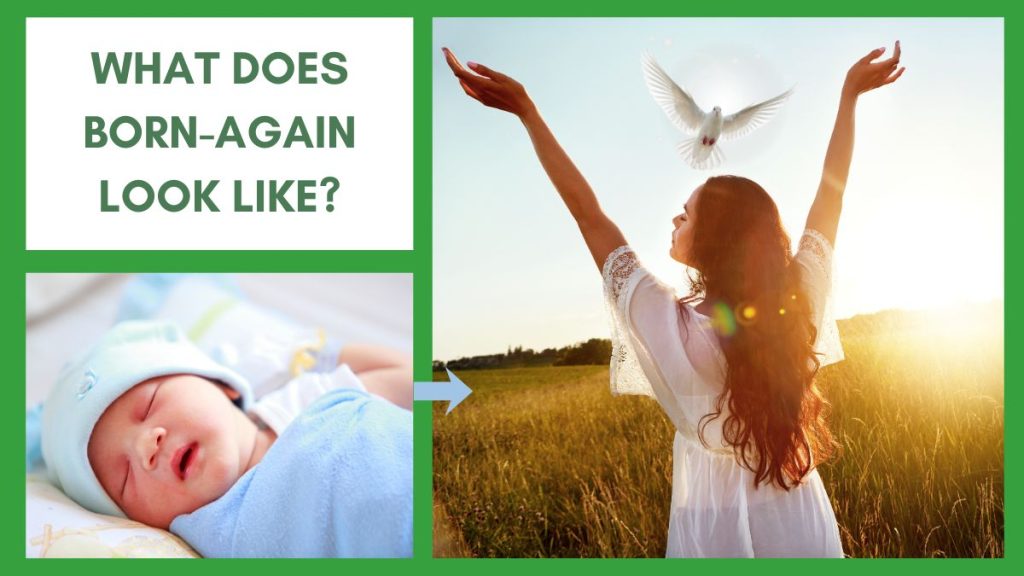
    In our last study, we looked at what it means to be Born-Again, and how Jesus made it clear that entering the Kingdom of God is not a casual experience, but a true transformation.

    As we continue, we now come to a very important statement that the Lord spoke to Nicodemus:

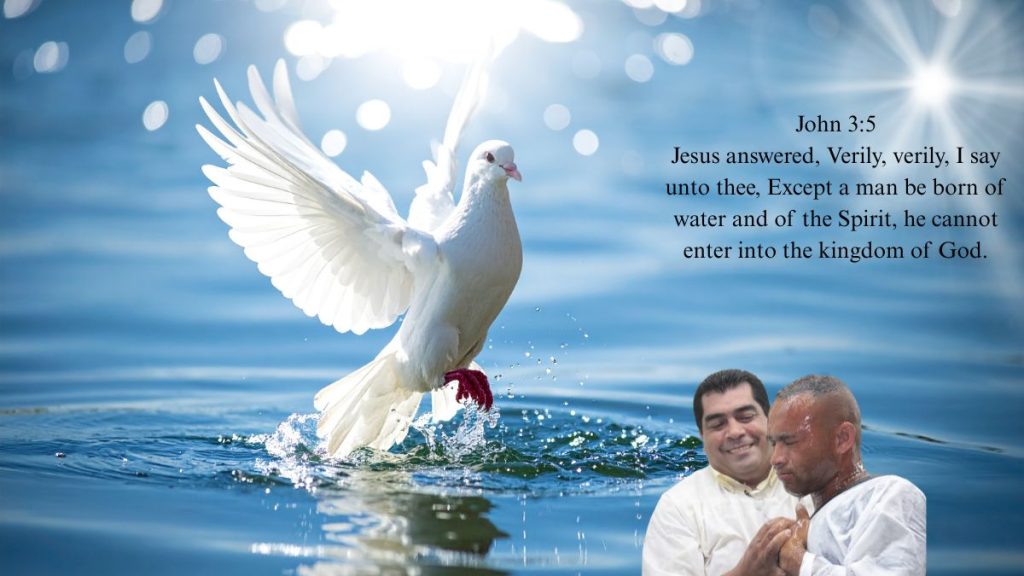
    “Verily, verily, I say unto thee, Except a man be born of water and of the Spirit, he cannot enter into the kingdom of God.” — John 3:5

    These words are not a suggestion.
    They are not symbolic language meant to be loosely interpreted.

    They are a direct and absolute requirement given by Jesus Himself.


    Greek Insight — “Water”

    When Jesus said we must be “born of water,” the word translated water comes from the Greek word hydōr (ὕδωρ).

    This word is used throughout the New Testament, and it consistently refers to literal water, not something symbolic or abstract.

    For example:

    • It is the same word used when John baptized in the Jordan River
    • The same word used when Jesus was baptized
    • The same word used when Philip and the eunuch went down into the water
    • The same word used when Peter said on the Day of Pentecost, “be baptized… in the name of Jesus Christ”

    In each of these cases, the meaning is clear — it is speaking of actual water.

    There is nothing in the wording of John 3:5 that suggests a symbolic meaning.
    Jesus was speaking plainly, just as He did in many other teachings.

    This helps us understand that being “born of water” is not merely an idea or a metaphor, but something that involves a real response — one that aligns with what we see practiced throughout the Book of Acts.

    When we allow Scripture to interpret Scripture, the meaning becomes consistent and clear.


    Greek Insight — “Spirit”

    When Jesus said we must be “born of the Spirit,” the word translated Spirit comes from the Greek word pneuma (πνεῦμα).

    This word refers to breath, wind, or spirit, and throughout the New Testament it is used to describe the Spirit of God at work within a person.

    Jesus had already used this same word just a few verses earlier:

    “The wind bloweth where it listeth, and thou hearest the sound thereof… so is every one that is born of the Spirit.” — John 3:8

    Here, the Lord connects the idea of the wind (pneuma) with the work of the Spirit, showing that while it may not be seen with the natural eye, its effects are real and evident.

    As we continue through the New Testament, we see this fulfilled when believers received the Holy Ghost. It was not merely an inward feeling, but a real and powerful experience — one that produced a visible change in their lives.

    So when Jesus spoke of being “born of the Spirit,” He was pointing to a true spiritual birth — the work of God within a person that brings new life.


    Main Body

    When Jesus said, “Verily, verily,” He was emphasizing something of great importance — something certain, something that cannot be set aside.

    To be born again, He tells us, involves two elements:

    • Born of water
    • Born of the Spirit

    This raises an important question:

    What did Jesus mean by this?

    Many today interpret this in different ways. Some say it refers only to a spiritual experience. Others suggest it is symbolic language. But when we allow Scripture to interpret Scripture, a clearer picture begins to emerge.

    Throughout the New Testament, we see a consistent pattern when people responded to the Gospel.

    On the Day of Pentecost, when the people were convicted in their hearts and asked what they must do, Peter gave a direct answer:

    “Repent, and be baptized every one of you in the name of Jesus Christ for the remission of sins, and ye shall receive the gift of the Holy Ghost.” — Acts 2:38

    Here we see the same two elements:

    • Water — baptism
    • Spirit — receiving the Holy Ghost

    This was not presented as an optional step, but as the response to the Gospel.

    As we continue through the Book of Acts, this pattern appears again and again. Those who believed did not stop at belief alone — they responded with obedience, and their lives were changed.

    The new birth is not merely an idea or a confession. It is an experience that affects the heart, the direction of life, and the walk with God.


    Application / Reflection

    This brings the question back to us:

    Have we experienced what Jesus described?

    Not simply a moment of belief,
    but a true new birth —
    one that involves both water and Spirit.

    The words of Jesus are clear:

    “Except a man be born of water and of the Spirit, he cannot enter into the kingdom of God.”

    This is not meant to discourage, but to guide us into truth.

    God has not hidden the path from us — He has revealed it plainly in His Word.


    Closing

    The new birth is where the Christian life truly begins.
    It is not the end of the journey, but the doorway into it.

    And when we follow what the Scriptures teach, we do not walk in uncertainty — we walk in the assurance of what God has promised.


    Next article in the series:

    “Repentance: The First Step Toward New Life”

  • You Must Be Born Again

    John 3:3

    One of the most direct and powerful statements Jesus ever made about entering the Kingdom of God was spoken during His conversation with Nicodemus. He was surprised by what the Lord Jesus spoke to him.

    “Jesus answered and said unto him, Verily, verily, I say unto thee, Except a man be born again, he cannot see the kingdom of God.”
    — John 3:3

    Nicodemus was a religious leader, a teacher in Israel, and a man familiar with the Scriptures. Yet Jesus immediately directed his attention to something deeper than religious knowledge or outward devotion.

    The Lord spoke about a spiritual birth.

    When Jesus said “Verily, verily,” He was emphasizing the absolute certainty of what He was about to say. It was not a suggestion or a philosophical idea. It was a divine truth. And this is what He taught Nicodemus.

    No one can see the Kingdom of God unless they experience this new birth.

    Nicodemus struggled to understand what Jesus meant. He thought in terms of natural birth and asked how a man could be born a second time.

    But Jesus was speaking about something spiritual—a transforming experience that gives a person the power to live for God as they truly desire, in righteousness and holiness.

    This is verified in Acts 1:8:

    “But ye shall receive power, after that the Holy Ghost is come upon you: and ye shall be witnesses unto me both in Jerusalem, and in all Judaea, and in Samaria, and unto the uttermost part of the earth.”
    — Acts 1:8

    Then in John 3:5 the Lord Jesus explained what the born-again experience entails:

    “Except a man be born of water and of the Spirit, he cannot enter into the kingdom of God.”
    — John 3:5

    Just as every person must experience a natural birth to enter this world, the Scriptures teach that a person must experience a spiritual birth to enter the Kingdom of God.

    This new birth is more than a simple profession of belief. It is the beginning of a transformed life.

    When a person truly encounters the Gospel and responds to God with faith and obedience, something changes within them. We are endued with power from on high, our heart is renewed, our lifestyle changes, and we begin walking in a new life with Christ.

    This does not happen with just a confession of faith or a personal acknowledgement of our belief. For this reason the Scripture says:

    “Thou believest that there is one God; thou doest well: the devils also believe, and tremble.”
    — James 2:19

    If simply saying “I believe” were enough, then even the devil could be saved.

    Jesus did not present the new birth as optional. He presented it as essential.

    “Ye must be born again.”

    These words still stand today as one of the most important truths in all of Scripture.

    Continue the Study — #4

    This article is part of a Scripture journey exploring how the Bible describes entering the Kingdom of God.

    Next article in the series:
    “Born of Water and of the Spirit — John 3:5”

  • Striving to Enter the Narrow Gate

    Luke 13:23–24

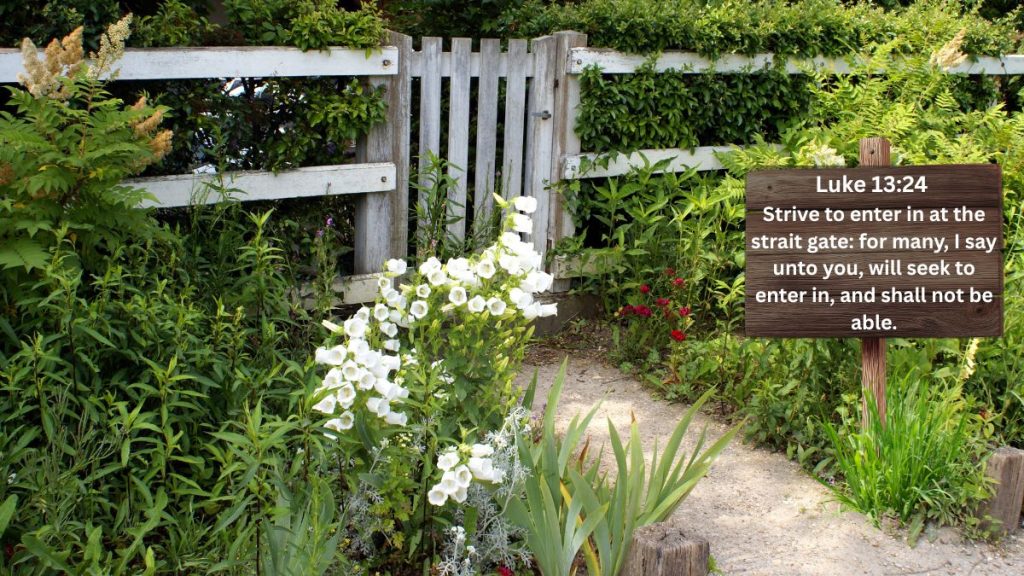
    “Then said one unto him, Lord, are there few that be saved? And he said unto them, Strive to enter in at the strait gate: for many, I say unto you, will seek to enter in, and shall not be able.” — Luke 13:23–24

    When someone asked Jesus the question, “Lord, are there few that be saved?” the Lord did not respond by giving a number. Instead, He gave a warning and an instruction: “Strive to enter in at the strait gate.”

    The word strive comes from the Greek word agonizomai, which means to struggle, to contend, or to exert earnest effort. Jesus was teaching that entering the Kingdom of God is not something casual or careless. It requires sincerity of heart and a genuine response to God.

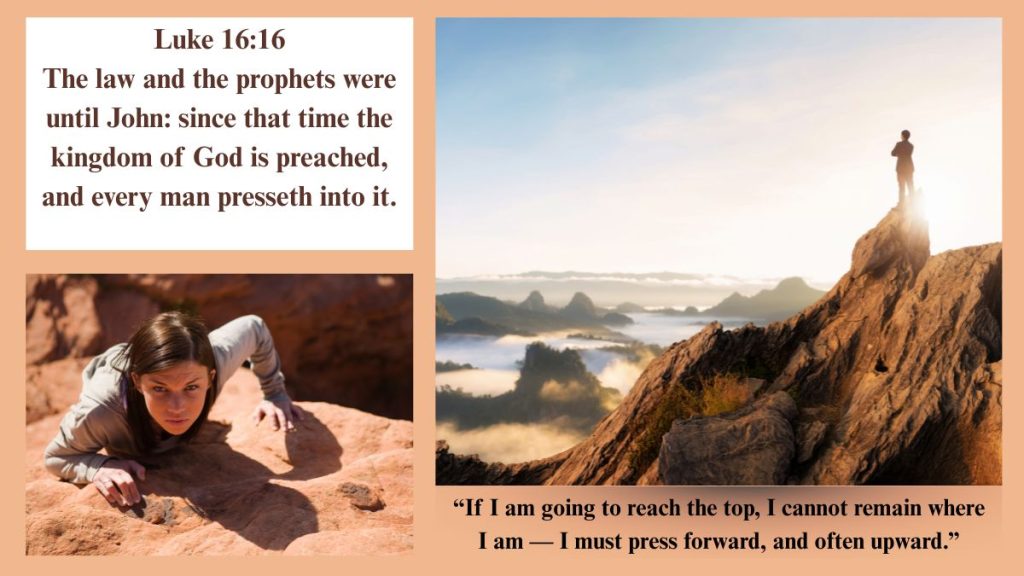
    In another place Jesus used similar language when He said, “The law and the prophets were until John: since that time the kingdom of God is preached, and every man presseth into it” (Luke 16:16). Both passages present the same picture: the Kingdom of God is open and being preached, but those who enter must respond with sincerity and determination.

    These words of Jesus stand in contrast to the common idea that entering the Kingdom is easy or requires little response from us. The Lord’s own teaching shows that it involves a sincere heart that is willing to pursue God and respond to His truth in obedience.

    The invitation of the Gospel is open, but Jesus did not present the Kingdom as something to drift into. He called people to press toward it with sincerity, humility, and faith.

    This is also a theme I explore more deeply in my book Faith Unto Salvation: Is It a Confession or an Experience?, where the Scriptures are examined to understand what the New Testament truly teaches about being Born-Again.

  • The Kingdom of God Must Be Pressed Into

    Luke 16:16

    Jesus made a statement that challenges the casual approach many people have toward the things of God.

    “The law and the prophets were until John: since that time the kingdom of God is preached, and every man presseth into it.” — Luke 16:16

    Notice the wording the Lord used. He did not say the Kingdom would be entered casually or by simple agreement. He said that men must press into it.

    The word “press” speaks of effort, determination, and desire. It paints the picture of someone who sees something valuable ahead of them and refuses to remain where they are.

    The Words of Jesus Challenge Casual Belief

    In our modern religious culture, many have been taught that salvation requires little more than confession — a simple verbal acknowledgement of belief. Yet when we read the words of Jesus, we see a very different picture.

    The Pursuit of the Kingdom

    In fact, the Lord spoke often about seeking, knocking, striving, and entering in. These words therefore describe an active pursuit of God.

    This is why the message of the Gospel always carries with it a call to transformation.

    As a result, when a person truly begins to seek the Kingdom of God, something begins to happen within them.. Their heart changes. Their desires begin to shift. What once satisfied them no longer does. They begin to hunger for righteousness and truth.

    This pressing is not about human effort earning salvation. Rather, it is the response of a heart that has seen the value of the Kingdom.

    Jesus illustrated this in another place when He spoke of a man who found treasure hidden in a field. When the man realized the value of what he had discovered, he sold everything he had in order to obtain that field.

    That is what happens when someone truly sees the Kingdom of God.

    The question we must each ask ourselves is simple:

    A Question for Our Hearts

    How deeply do we desire the Kingdom of God?

    Is our pursuit of God something casual and occasional? Or have we begun to press toward Him with a sincere heart?

    “The words of Jesus remind us that the Kingdom is not something we drift into. It is something we pursue with faith, humility, purpose, and a heart that longs for truth.”

    And the beautiful promise of Scripture is that those who truly seek Him will not seek in vain.

    “Blessed are they which do hunger and thirst after righteousness: for they shall be filled.” — Matthew 5:6


    Jesus said the Kingdom of God must be pressed into. What did He mean by pressing into the Kingdom of God?

    Read more Scripture insights

    🌐 https://anchorofhopepublication.com/blog/

  • Is Salvation Just a Confession — or a Transformation?

    In many circles today, salvation is often reduced to a moment.

    A prayer prayed.
    A hand raised.
    A confession spoken.

    But is that how Scripture presents the new birth?

    This is not a question meant to criticize sincere believers. It is a question meant to bring clarity. Because if we misunderstand salvation, we misunderstand the very foundation of the Christian life.

    Jesus did not tell Nicodemus, “You must confess correctly.”
    He said, “Except a man be born again, he cannot see the kingdom of God” (John 3:3).

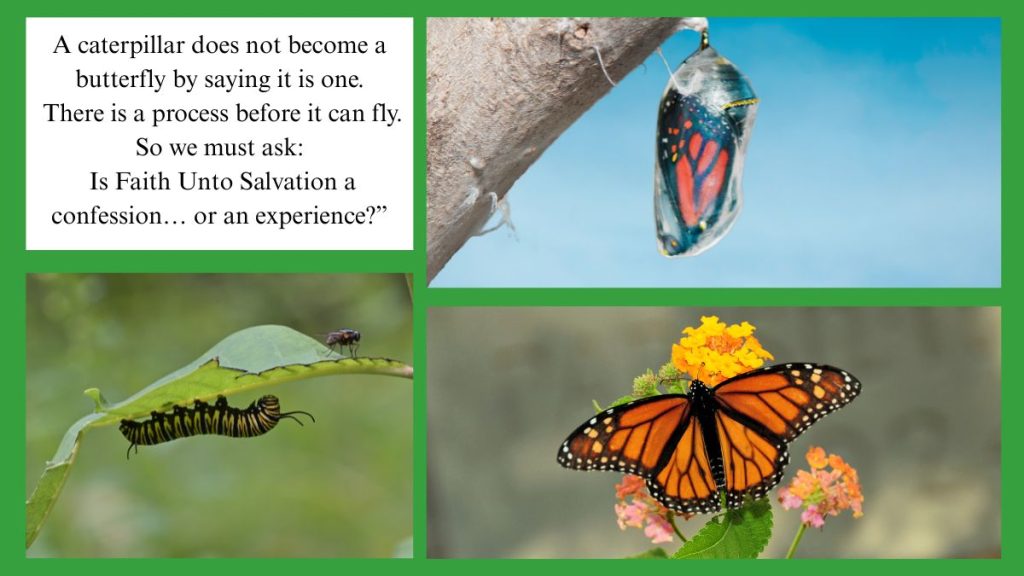
    A birth is not merely a statement. It is a transformation.

    When Jesus spoke of being born again, He described something spiritual, inward, and life-altering. Birth implies beginning. It implies change. It implies that something new has come into existence that was not there before.

    Yet modern language sometimes reduces salvation to a transaction — a moment of verbal acknowledgment — rather than a supernatural work of God within the heart, and within our life.

    In Acts 2:38, Peter did not present salvation as a simple formula. He declared, “Repent, and be baptized every one of you in the name of Jesus Christ for the remission of sins, and ye shall receive the gift of the Holy Ghost.”

    Repentance is not mere regret.
    Baptism is not symbolic ritual alone.
    Receiving the Holy Ghost is not emotional excitement.

    Each of these speaks of participation in a transforming work of God.

    The early Church did not preach casual conversion. They preached new life.

    This does not mean that words are unimportant. Confession matters. Faith must be expressed. Scripture tells us that we confess with the mouth and believe in the heart (Romans 10:9–10).

    But confession without transformation leaves something incomplete.

    If a man claims to be born again yet remains untouched inwardly — unchanged in desire, unchanged in direction, unchanged in allegiance, and unchanged in lifestyle — should we not carefully examine what Scripture means by new birth?

    Salvation is not behavior modification.
    It is not moral improvement.
    It is not religious affiliation.

    It is like uncovering a well in dry ground. The digging does not create the water — it simply removes what blocks it. When the living water flows, it refreshes the weary heart in a way no human effort ever could.

    When a person is truly born again, something shifts. The heart is awakened. The conscience is stirred. The love of sin is challenged. Our love for Christ begins to grow.

    The Christian life is not built upon a sentence spoken once. It is built upon a life made new.

    This gentle reminder is not meant to unsettle sincere believers, but to encourage deeper reflection. The foundation of our faith must be strong. If it is shallow, the structure built upon it will struggle.

    Salvation, according to Scripture, is not less than confession. But it is certainly more.

    It is transformation.


    This topic is explored further in Faith Unto Salvation.
    Learn more at AnchorOfHopePublication.com.

    Want to Go Deeper?

    If this message encouraged you, I invite you to download my free 5-Day Devotional:

    Receive steady biblical encouragement rooted in Scripture — designed to strengthen your faith and anchor your heart in God’s Word.

    Join the Scripture Study Community and receive it instantly.

    👉 https://anchorofhopepublication.com

    Grounded in Faith. Guided by Hope.

  • Hello world!

    Welcome to WordPress. This is your first post. Edit or delete it, then start writing!